You might think a list of 30 things to do in Tanzania sounds excessive, but there’s actually so much to do in Tanzania that it was actually a little tough to narrow this down! Many travellers choose to visit Tanzania for the impressive safaris and brilliant white sandy beaches of Zanzibar, but what they don’t realise is that there are many more incredible things to see, so unfortunately they often miss out.
Tanzania Local Safaris is all about celebrating everything this incredible country has to offer, not just safaris, and helping all of our customers learn more about it in their own way and at their own pace. We’re led by Tanzanian people and wildlife and community ethics are at the forefront of everything we do. Get in touch today for your Tanzania trip quote!
Table of Contents
Planning a trip to Tanzania? Here are my essentials
📃Get your Tanzanian e-visa here
🩺Make sure you have great travel medical insurance! We partner with SafetyWing
❗If you’re visiting Zanzibar, you now need an additional mandatory insurance
🤳🏽 Use Holafly eSIM for unlimited data and a Vodacom SIM on arrival for calls
👉🏽 Get 5% off Holafly with code THATTRAVEL
🦟 A good bug spray is ESSENTIAL. We recommend incognito (15% off with code THTRAVEL)

30 Incredible things to do in Tanzania
1. Experience the wild Serengeti plains
You know when you picture a typical African safari: expansive desert plains, lions roaring you to sleep at night, elephants grazing at sunset…? That’s pretty much the Serengeti. If you want to sink your teeth into a safari and give yourself the best shot of seeing everything, it really has to be the Serengeti you visit, whether it’s Central Serengeti, which has the best chance of seeing lions, or rugged Northern Serengeti, where you can sometimes get the most incredible wildebeest crossing shots (depending on the time of year).
You need at least 3 days on safari to enter the Serengeti, as it’s a little further from Arusha than some of Tanzania’s other national parks. If you can spare the time, you won’t regret it.
id you know: all of our safari quotes are tailor made entirely to suit you? Drop us an email today and we’ll help you put the perfect trip together!

2. Get your fill of wildlife in Ngorongoro Crater
Wherever you go in Tanzania, make sure you make time for the mindblowing landscape of Ngorongoro. As a crater on the fringes of the Serengeti, Ngorongoro is the perfect place to try to see a vast density of wildlife (and we really do mean wild!) in a relatively small space. Think elephants grazing alongside hippos… lion and antelope coexisting (before the hunt!) and spectacular surrounding landscape that will have you gasping for the whole drive.
Ngorongoro is best organised with a guide, as it’s difficult to obtain the passes independently, but, well, you know where we are!

3. Try to spot elephant megaherds in Tarangire
You know what is the most common thing people say to us when they’re heading to Tanzania? ‘I really want to see elephants.’ You’re in luck, because Tanzania has its very own elephant paradise, Tarangire National Park, where you can expect to find more elephants than you will anywhere else in the country, and maybe even the world.
Elephants are magnificent creatures and if you spot a herd, you’ll almost certainly see a baby or two, since they stay relatively small for around 10 years after being born! Keep your eyes peeled for the impressive lone bull elephants too. Tarangire is also home to many other species of flora and fauna that make the part well worth visiting!

4. Trek with chimpanzees
Very few visitors actually know about Gombe Stream National Park, even though it’s the place Jane Goodall first studied chimpanzees, Gombe receives surprisingly few visitors each year. People often flock to nearby Bwindi National Park (in Uganda) but Gombe is where you’ll find troops of a different primate: chimpanzees.
The trekking is hard work and you could be walking for 8 hours to find the chimpanzees (if you spot them at all!) but the pay off is completely worth it and your reward should be moments you’ll never forget as long as you live. You need to get to Kigoma to start the trip to Gombe.
✨If you want to know more about chimpanzee trekking in Tanzania, take a look at this guide!

5. Climb Mount Kilimanjaro
It takes around 5 days to reach the awe-inspiring Uhuru Peak of Kilimanjaro Mountain, one of the most iconic places in Tanzania, and 7 days in total for the round trip. Ask any Tanzanian about Kilimanjaro and they’ll tell you how beautiful it is, but you have to see it yourself to believe it!
The climb itself isn’t so difficult and most climbers will be able to do it, especially with some preparation and training, but what really gets you is the altitude! 5895 meters above sea level is no joke, and you’ll need to go slowly and carefully to make sure you acclimatise properly. The guides on Kilimanjaro are some of the best though, so you’re in truly great hands.

6. Tackle Mount Meru
As an Arusha-based company, Mount Meru holds a special place in our hearts. Towering over every street in Arusha, and visible most days, you couldn’t miss Meru if you visit ‘the gateway to the safari parks’. Meru is actually a challenging climb and some would say harder than Kili, but the altitude isn’t as severe, and you usually only need around 4 days in total to complete the climb.
One side of the mountain is made entirely of ash, so there are only a limited amount of routes you can take. The views from the top are absolutely spectacular, and on a clear day, you’ll get one of the most breathtaking views in the world, where you can usually see Kilimanjaro and its snowy peak.
Meru is considerably cheaper to hike than Kili too. Where Kili will set you back around $1500, you can usually find a guide willing to lead you up Meru for around 700-1000$ and you don’t necessarily need to prebook as far in advance to climb Mount Meru.
✨ Staying in Arusha? Check out this useful Arusha City Guide!

7. Brave the fires of Ol Doinyo Lengai
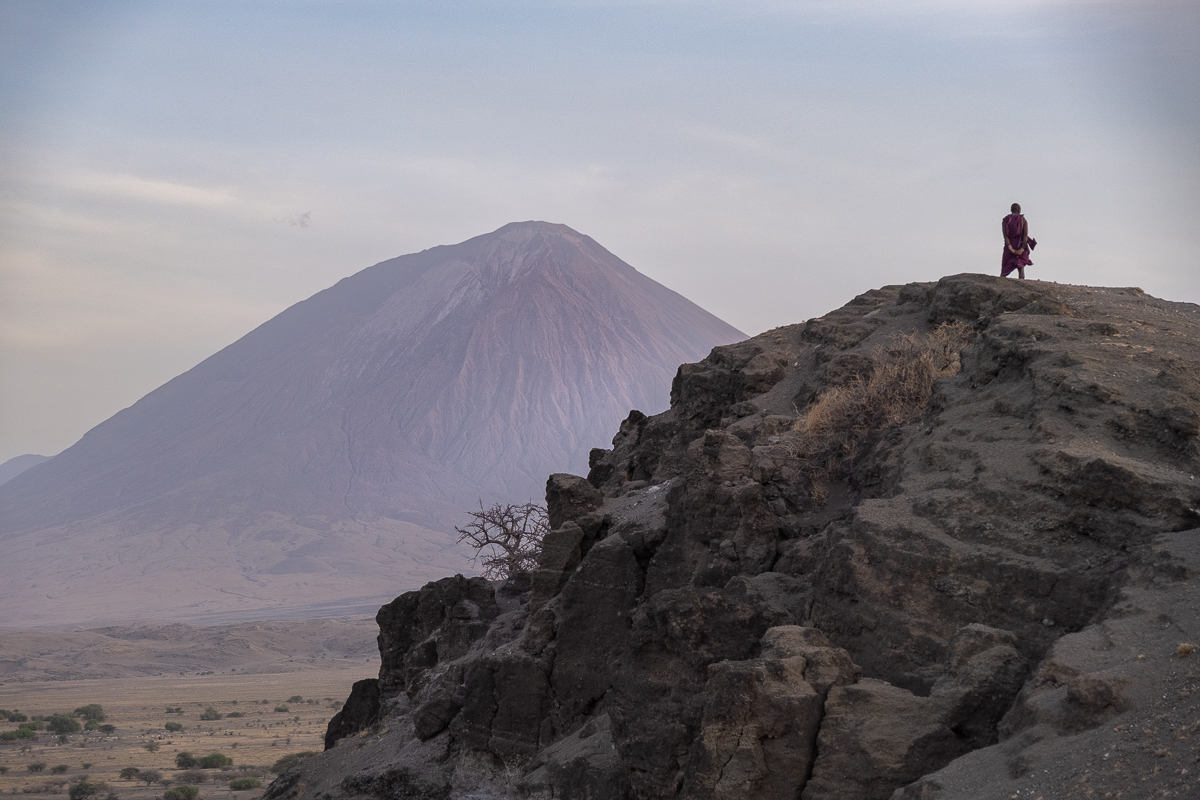
Ol Doinyo Lengai is one of the most imposing sights in Tanzania, rising out above the eerie waters of Lake Natron. It’s sacred to the Maasai and Sonjo tribes, and its name in their language means ‘The Mountain of God’. Not many visitors know that you can actually climb the volcano and peer down into its fiery depths, but beware, it’s a tough hike!
As one of the steepest mountains in Tanzania, you need to start climbing around midnight, so that you won’t be up the mountain in the treacherous day time heat. 6 hours of the hike is climbing, and most hikers finish the total trip around 10am. That means you do usually reach the peak for sunrise too!
Even from the base, the mountain is impressive, and its proximity to the ‘red lake’, Lake Natron ensures a dramatic view from the top. This is one of Tanzania’s most challenging climbs, even though it is quite short.

8. Hike the Usambara Mountains
The Usambara Mountains are easily some of the most beautiful mountains in the country, but very few tourists actually visit. If simple living and relaxation are your thing, then the Usambara Mountains are a must-visit. The best town to get to is Lushoto, from which you can take multiple beautiful hikes – the longer you stay, the more you can try!
What Lushoto lacks in facilities, it makes up for in views, hikes and wildlife. You can hike through the mountains with an experienced guide, have lunch at the increasingly popular Irente Farm Lodge (and Biodiversity Reserve), see the stunning Irente Viewpoint or just relax in your lodge and take it easy for a few days.

9. See 3 countries at once at Lake Victoria
Lake Victoria straddles 3 different countries: Uganda, Tanzania and Kenya (but only just!). The Tanzanian side of Lake Victoria is absolutely beautiful and the main lakeside city is Mwanza, Tanzania’s second biggest city (it feels huge!). It’s a very interesting city, with some lovely lakeside hikes and spots to relax.
Don’t forget to keep your eyes peeled for the vibrant red and blue lizards that live on the rocks by the lake, and of course the famous landmark, Bismarck Rock (pictured above). No one is quite sure how the rock continues to balance, but it’s never fallen!

10. Find the best sunsets at Lake Tanganyika
As you can probably imagine, the Western side of Tanzania gets some of the best sunsets in the country, and perhaps nowhere more so than the incredible Lake Tanganyika. There are a few lakeside towns, but if you’re planning to visit Gombe Stream National Park, you’ll probably want to base yourself on the Northern side in Kigoma
Lake Tanganyika actually sits across four countries; Tanzania, the DRC, Burundi and Zambia. Interestingly though, it isn’t as big as Lake Victoria! From Kigoma, you can also get across to Burundi.

11. Peek across to Malawi
Many people are surprised to find that you can visit Lake Malawi from Tanzania, but actually you can! There are many lake-side towns on the edge of the lake, where you can enjoy swimming and soaking up the beautiful vibes of this lake.
The lake itself is filled with small, multi-coloured fish, known as cichlids, which are absolutely beautiful and completely unafraid of humans! It is advised to take praziquantel after swimming in the lake to reduce any risk of schistosomiasis, but we definitely recommend to consult a doctor for their advice on this!
You can see across to Malawi if you go hiking around the lake, but you currently can’t get across to Malawi via boat from Tanzania.

12. See the red waters of Lake Natron
It’s probably best to put a proviso on this that Lake Natron is not always ‘red’! Though it is an alkaline with a very high salt content, and sometimes does appear red (particularly during the dry season), mostly it is a dark blue lake. That’s not to say it isn’t a very atmospheric place, particularly with its beautiful backdrop of the imposing mountain, Ol Doinyo Lengai.
The real appeal of Lake Natron though is the flamingos who usually sit atop the lake in a huge flamboyance or two. You can’t usually get too close, as the flamingos are wild, but you can still take nice photos with a telephoto lens. The other wildlife around Lake Natron is mostly antelopes and zebra, but if you’re very lucky, you might spot their rare herd of melanistic (black) giraffes.
In the area, you can also visit the Engare Sero waterfalls (rumoured to inspire good luck in all who swim in them!), keep your eyes peeled for zebra and giraffes, and meet some of the incredible surrounding Maasai communities in the area. We almost always include Lake Natron in our itineraries, as it’s a wonderful experience. Ask about our trips there today!

13. Try to spot tree-climbing lions in Lake Manyara
Lake Manyara is very close to Arusha and it’s another alkaline lake (soda lake) that houses a flamboyance of African flamingos. The most famous inhabitants of the national park, however, are the tree-climbing lions. It’s rare to spot lions in trees (you’re more likely to find leopards there) but in Manyara, the lions use the trees for shade and to escape insect bites.
Apart from the lions, Lake Manyara is very beautiful in its own right, and has one of Tanzania’s densest concentration of elephants. Lake Manyara region is also home to the Iraqw people, who call the lake Lake Moya.

14. Meet the Hadzabe tribe at Lake Eyasi
The Hadzabe tribe are less well known in Tanzania than the Maasai, but they are a key part of Tanzania’s history, heritage and culture. They live a hunter-gatherer lifestyle and have survived in Tanzania for over 10,000 years in nomadic groups. They typically don’t use any livestock, but live entirely off the land, relying on bow hunting and foraging.
At Lake Eyasi, you can learn more about their way of life. A visit to the Hadzabe tribe is an opportunity to learn more about a traditional culture from their perspective, as they share their daily life.

15. See the crocs at Lake Rukwa
Though very few tourists get to visit Lake Rukwa, it is one of the most impressive lakes to visit in Tanzania, with incredible, undisturbed nature and a huge variety of flora and fauna, including a massive hippo and crocodile population. In fact, if you’re interested in seeing crocodiles, this is the place you should visit first, as it has more crocodiles than the rest of the country!
Rukwa is also close to Mbizi Forest Reserve (home to some beautiful animals like red colobus monkeys), Kalambo Falls (the boundary between Tanzania and Zambia) and Bismarckburg Fortress (a German colonial military base). It’s a very interesting area, close to mountainous Mbeya.

16. See the craters of Lake Chala
Lake Chala is the deepest lake in Africa and comes from the underground springs surrounding Mount Kilimanjaro. It actually straddles Kenya and Tanzania and was thought to have been formed a mind-blowing 250,000 years ago. Not only is the scenery around Chala very diverse, but also the wildlife, and you can spot lots of birds of prey, including the epic African Fish Eagle.
If you’re lucky, you also may see dik dik (Africa’s smallest antelope) and even elephants. It’s an incredible place for hiking, birdwatching and swimming, and well worth visiting if you’re in the Moshi region.

17. Look for bioluminescent algae and mangroves on the Swahili Coast!
The Swahili coast is the East Coast of Tanzania and Kenya, but since so many people are focused on getting to Zanzibar, it’s often ignored. Many of the Swahili Coast beaches are little-known and therefore usually pretty empty when you visit. Our favourite might be Pangani beach, which has a host of beautiful mangrove trees, and bioluminescent algae.
There are multiple spots up and down the Swahili Coast where you can catch bioluminescence, depending on the time of year. If you don’t want to go across to Zanzibar, the Swahili Coast is an excellent alternative spot, plus you can travel overland.

18. See with your own eyes how beautiful the beaches are in Zanzibar
People will tell you the beaches in Zanzibar are beautiful, but it’s hard to believe it until you’ve seen it with your own eyes! Most of them are white sand beaches: Paje, Jambiani, Kendwa and Nungwi, and they’re all an incredible place to relax, sunbathe or walk along and enjoy. Please remembe to leave the starfish alone, they don’t need to be pulled out of the waters for photos, and it’s really bad for them.
You can stay in the fascinating UNESCO World Heritage Site, Stone Town, but there are so many other interesting and beautiful places to stay too! Most of the rest of the island is split up into resorts and resort towns, and they have different things to offer. The hotels also have different price points, so don’t give up if you’re only finding expensive hotels at first.

19. Party in Dar es Salaam
Maybe you’re not visiting Tanzania to party (which makes complete sense!) but we’d recommend not to over Dar es Salaam’s vibrant evening scene, as it is a really fun place to be. Dar es Salaam is Tanzania’s largest city and commercial capital (though the actual capital city is Dodoma). Dar es Salaam (also just known as ‘Dar’) has some fun bars, especially on a Thursday night, when the whole city comes alive with karaoke!
There is also a beautiful beach in Dar es Salaam, which many tourists miss, and it’s a great place to find some of Tanzania’s beautiful fabrics (kitenge) at an affordable price, particularly in the Kariakoo district.

19. Check out Mafia or Pemba island
Mafia Island is one of the most remote and beautiful places in Tanzania and the world. It’s a small island with a laid-back, lazy culture, some incredibly pretty beaches and waters full of amazing marine life, such as whalesharks.
In recent years, it has become much more popular with tourists (especially backpackers) in Tanzania, but getting there can still be a challenge! You can fly or take the ferry, but you often need to wait a few days to get a flight or a boat. The ferries have improved dramatically in recent years, and the reward is a stunning island with pure white beaches, beautiful snorkelling and unique culture.

21. Find whale sharks (responsibly)
Mafia Island is one of the best places in the world to see and snorkel with whale sharks. You can actually find them on the island year-round, but one of the best times to do so is October-March. This is because they feed at this time on the Western side of the island (Kilindoni) and are easiest to find. You don’t need a PADI (diving licence for this) and can snorkel with the sharks.
Sadly, because it is so easy to find whale sharks and because tourism has started to grow lately, it’s quite tricky to find ethical whale shark tour providers in Mafia. To interact with the whale sharks on their terms, follow the below basic guidelines.
NEVER touch the whale sharks – keep a safe distance.
Don’t chase them -you can stress the whale sharks out by doing this, so let them swim on their own terms.
Choose a responsible company if you take a tour – make sure there are no pictures of people touching whale sharks on their website, look for accreditations and make sure their language puts the animals first.
If it looks really crowded around the sharks, be sure to avoid this too.

22. Be in awe of Zanzibar’s Old Fort (Ngome Kongwe)
The epicentre of Stone Town in Zanzibar is Zanzibar’s Old Fort, also known as Ngome Kongwe. It’s a beautiful part of the old town, with a small market and amphitheatre inside. There are a few signs (more than you get at most ruin sites in Tanzania!) with information following Stone Town’s UNESCO World Heritage Trail, and it’s totally free to enter.
We recommend to take a look round some of the shops, as there are some great souvenir stalls, including a stall run entirely by disabled artisans.

23. See ancient Tongoni Ruins
Tanga is a small fishing town on the East Coast of Tanzania, and is the gateway to the Swahili Coast beaches on this side of the country. Beyond that, it is also home to the Tongoni ruins and the impressive Amboni Caves.
The Tongoni Ruins are a compact ruin site (but have a very little signage) with a reasonable entry fee of 10,000 TSZ (around £3). The ruins themselves used to be a mosque and several tombs.

24. Dive deep into the Amboni Caves
The Amboni Caves form a huge limestone cave complex, one of the biggest in Africa, and are well worth a visit! They are said to have been formed around 150 million years ago, which is pretty spectacular, and are thought to extend for around 200km, though only one of the ten caves in the complex is currently open to the public. You need to visit as part of a guided tour.
You might be lucky enough to spot some bats inside – a head torch is recommended, as it can get slippy underfoot!

25. Marvel at the ruins of Kilwa Kisiwani
You can find the ruins of Kilwa in port town on an island just off Tanzania’s East Coast and they’re actually a UNESCO World Heritage site. Kilwa island used to be a trading port for merchants and much of the island actually still lies unexcavated.
The main site, the Grand Mosque, is seriously impressive and made predominantly of coral! The island is down South, around 5 hours’ drive from Dar Es Salaam, so if you’re in the area, it’s well worth taking a look.

26. Explore Zanzibar’s UNESCO heritage capital city
Stone Town is one of the most beautiful cities in Tanzania and completely different from the cities on the mainland. It’s full of winding alleyways, incredibly preserved unique doors, spice markets and cute little boutique shops, as well as the ever-popular night markets. You can walk the Stone Town trail and try to learn more about each of the doors or step inside some of the older buildings.
Remember, Stone Town is a Muslim city and, as such, you need to dress respectfully. There are signs asking tourists to wear cover ups after the beach, you can’t just walk around in your bikini!

27. Eat, eat and eat some more at Zanzibar’s night markets
Possibly my favourite place to eat in Tanzania is the Forodhani night markets in Zanzibar and I personally find it a crime when people visit Zanzibar and skip them! If you can’t decide what to eat, start by checking out this guide to food in Tanzania, but I highly recommend trying:
Zanzibar pizza – not actually a pizza at all, more of a pancake stuffed with fillings (sweet or savoury!). They are really good, and customizable to whatever you want.
Urojo – potato and mango soup but stick with me because it actually works?! It’s savoury, sour, spicy and delicious, don’t skip.
Ufuta naan – the softest, fluffiest most incredible sesame bread you’ll ever taste! It’s actually better in other places outside of the markets (like Lukmaan’s restaurant) but we do like it here too.
Be sure to grab some freshly squeezed sugar cane juice as well!

28. Take a coffee tour in Arusha or Moshi
The North of Tanzania, a.k.a. the slopes of Mount Kilimanjaro and Mount Meru, is somewhere you’ll find some of the best coffee in the world, and while you’re there, you absolutely must learn how to make it. There are several coffee tours in the region, but we keep the one we recommend top secret except for our clients! We’re pretty confident it’s the best one out there, but you have to book with us to find out!
A coffee tour in Tanzania always involves a lot of singing, dancing and generally making the time pass more quickly. You’ll absolutely love it!

29. Learn all about Zanzibar’s spices
While coffee is the stuff of the North, Zanzibar is all about its spices. From Stone Town, you have so many to choose from, but I think this one is our favourite (best if you hire a car, or we can help you with that!). These tours take you through the spice farms in Zanzibar (colloquially known as the Spice Island), teach you how the spices are grown and used, and allow you the chance to buy your own. They’re a really fun ‘something different’ in Zanzibar and we definitely recommend you to try one.
You’ll learn what’s grown in Zanzibar, how it goes through the process of getting to you and what different spices are used for.

30. Swim in a hot spring
There are actually quite a few nice hot springs and natural places in Tanzania, but the one that’s easily accessible for most tourists is Chemka hot springs near Arusha. It’s roughly an hour out of town and easy to reach by a mix of public transport and tuktuk, or you can easily drive. The hot springs are completely natural and really fun for a day out.
Set in a secluded forest grove, you can swim through draping trees and gorgeous scenery. Lately, it’s become a popular spot after safaris, so it’s now pretty well-known. This doesn’t make it any less fun, and there are rarely huge crowds of people. The locals have a great set-up too, as they hire out inflatables and tired to help people visit safely.
Chemka is a lovely little addition to any trip and, if you’re visiting independently, just ask for (or Google) maji moto, which is the local name for it, meaning ‘hot water’.
✨If you want to know more about Chemka Hot Springs, this is the article for you!
Struggling to narrow things down?
If you can’t decide what to do, try our travel partner’s 2 week overlanding itinerary, or talk to us about your trip! We can help you figure out the best route for you based on your interests.
If you enjoyed this article, why not try us for your safari quote? We don’t just book safaris, we can help you with anything you want to do in Tanzania!
📩 Drop us an email on [email protected]
📲 WhatsApp us on +447977339592
🤍 Follow us on Instagram
📘 Read more about our work here